Product · 2026
Caestro
Work starts with a Space.
- Role
- Design, architecture and build
- Status
- Closed beta
- Built with
- TypeScript · Postgres · Cloudflare Workers · Desktop app
- Live
- caestro.app ↗
The idea
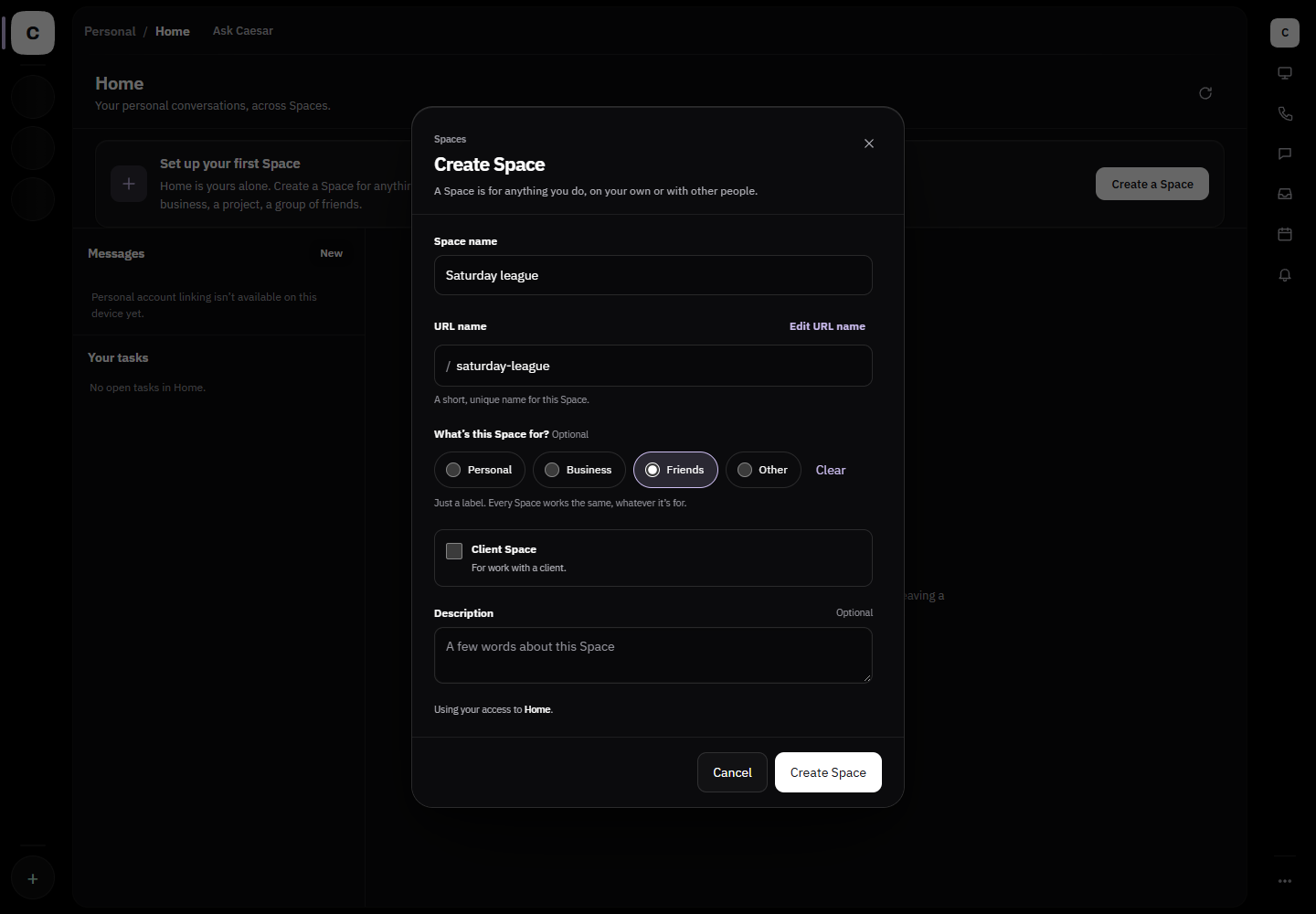
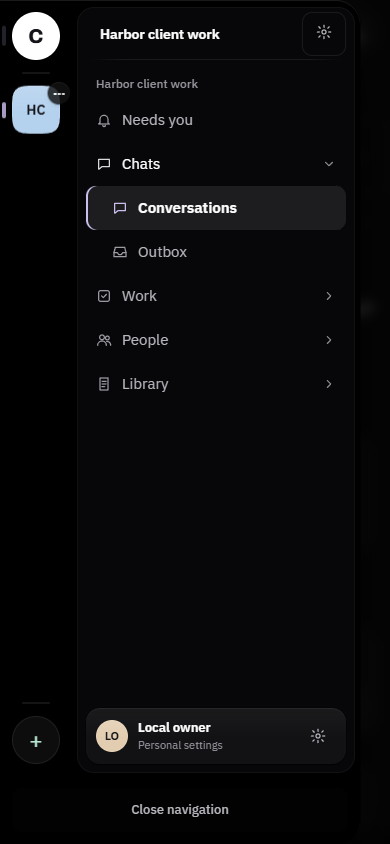
Most AI tools are a chat window bolted to the side of the work. You explain the context, get an answer, and the context dies when the tab closes. Caestro inverts that: the context is the product. You make a Space for a business, a client, or a project, and everything about that job — chat, tasks, files, calendar, and whatever custom tools the job needs — lives inside it. Come back tomorrow and the Space is still the Space.
Caesar, and the specialists
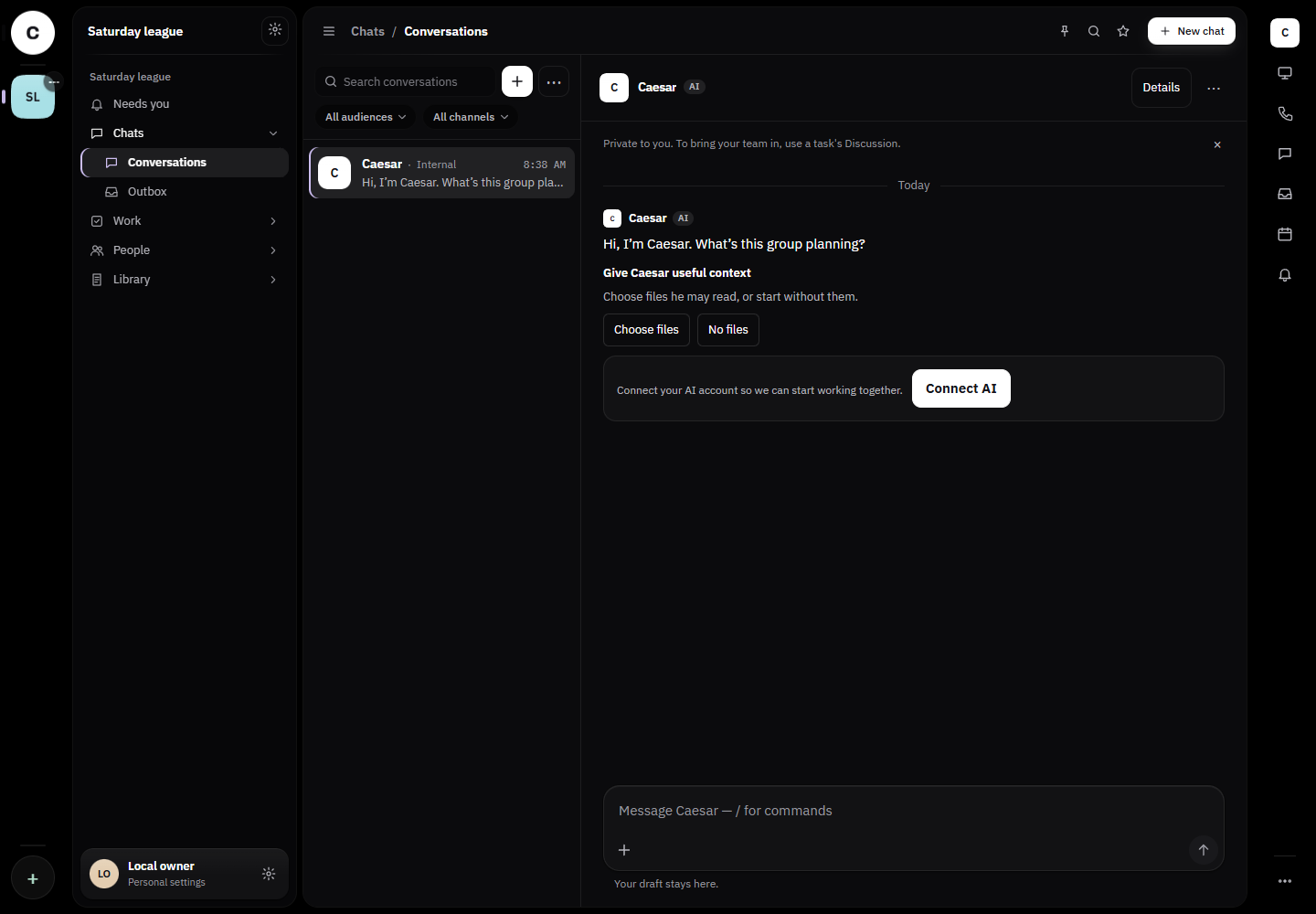
You give Caesar a request. A specialist agent does the work. You approve the result. The roster shows humans and agents in one list, with assignments and progress visible side by side, because from the perspective of the job there is no useful difference between them — only a difference in what each is good at and what each is allowed to do.
The approval gate
Anything headed for a customer stops and waits for a person. This is the part of the design I care most about. An agent that can draft is useful. An agent that can send is a liability you have handed to a stranger. The gate is not a setting — it is where the architecture puts the boundary, and it is the same boundary in every Space.
Spaces are not folders
Two remodelling companies using Caestro end up with different software, because an agent inside a Space can build what that Space needs: a dashboard, a job board, a pipeline page. The Space is a container that grows tools rather than a container that holds files.
Where it is
Closed beta, invitation only. Public access is not open, and the screenshots here are a real build running on real local data — the league in the conversation is a demonstration, not a customer.